Emergency preparedness in Denmark: three days at home
A winter storm knocks out the power for a day, the shops are quiet and your phone is at 15%. The Danish government's campaign Forberedt på kriser (Prepared for crises) asks you to be ready to look after yourself for three days, and it gives you a list to start from.
Styrelsen for Samfundssikkerhed, the Danish government agency behind the campaign Forberedt på kriser, asks you to be able to manage for three days (tre døgn) with your own preparedness at home. It plans 3 litres of water per person per day and food for three days. The emergency number is 112.
Emergency numbers in Denmark
| Service | Number | Source |
|---|---|---|
| Emergencies: ambulance, police and fire brigade | 112 | Styrelsen for Samfundssikkerhed, "Forberedt på kriser" |
The campaign page says: “Hvis du har brug for ambulance, politi eller brandvæsen, skal du ringe 1-1-2. Du skal kun ringe 1-1-2, hvis det er en akut nødsituation.” That is, call it if you need an ambulance, the police or the fire brigade, but only if it is an acute emergency (our translation). We read this page in November 2026.
What the Danish government asks
Styrelsen for Samfundssikkerhed runs the campaign Forberedt på kriser, “Prepared for crises”. On its page it says:
“du har et hjemmeberedskab til at kunne klare dig i tre døgn.” (Styrelsen for Samfundssikkerhed; our translation: “you have home preparedness that lets you manage for three days.”)
We read this on 13 November 2026. The same page says: “Sørg for at have mad til tre døgn i husstanden.” (our translation: “Make sure you have food for three days in the household.”). A døgn is a period of 24 hours, so the Danish figure is three days.
Our suggestion: treat three days as the minimum, and add days as space and budget allow. Our guide to how many days an emergency kit should last puts Denmark next to other governments.
Water
Denmark has its own figure. The campaign page says:
“Beregn 3 liter vand pr. person pr. døgn til at drikke og evt. tilberedning af mad.” (Styrelsen for Samfundssikkerhed, our translation: “Count on three litres of water per person per day for drinking and, if needed, preparing food.”)
For three days, the page says you need 9 litres of water per person, and that you should have water for everyone in the household, pets included. The government’s FAQ calls the three litres the minimum you need for drinking and cooking in a day. Other governments use other figures, and the water guide compares them.
A handful of examples from the government’s list
The campaign page lists more than this. Five examples:
- Food that keeps outside the fridge and freezer and needs little cooking, such as tins and crispbread.
- A first aid kit.
- Hygiene items such as toilet paper, hand sanitiser and wet wipes.
- A radio. The page says an FM radio that runs on batteries, a hand crank or solar cells lets you stay informed if other channels fail.
- A power bank, which the page says keeps your phone powered during local power cuts.
The full list, adjusted to your home, is in the app.
What changes in your home
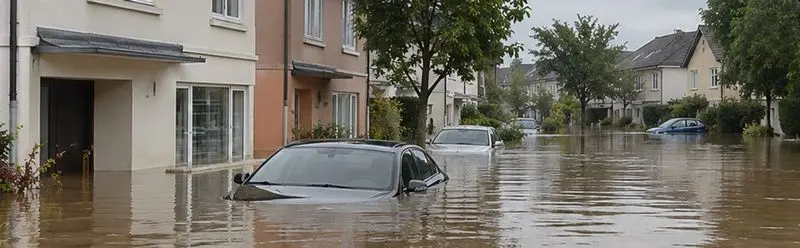
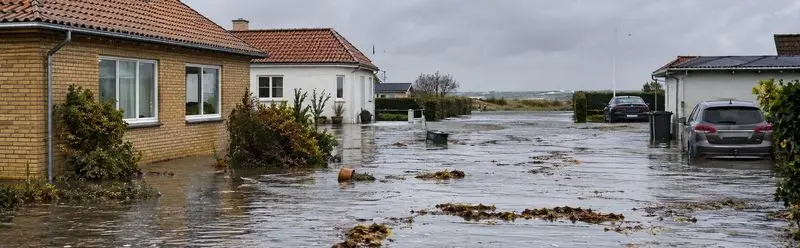
Who lives with you changes the list: small children, older relatives, people who are ill and pets each need different things. Where you live matters too. The campaign page says that if you live close to the coast or in a low-lying area, you can be hit by flooding. The list that fits your home, with those differences built in, is in the app.
What this means for your home
| People at home | Water for 3 days |
|---|---|
| 1 | 9 L |
| 2 | 18 L |
| 3 | 27 L |
| 4 | 36 L |
Food for 3 days
Styrelsen for Samfundssikkerhed plans 3 litres of water per person per day, and asks you to be able to manage for three days (tre døgn) at home, so 9 litres per person for three days. Source: Styrelsen for Samfundssikkerhed (Denmark), "Forberedt på kriser"
Where to read more
- The campaign page Forberedt på kriser of Styrelsen for Samfundssikkerhed, in Danish, and its FAQ.
- The DMI page on storm surge, in Danish.
Common questions
How many days does the Danish government ask you to prepare for?
Three days, which the page calls tre døgn (periods of 24 hours). Styrelsen for Samfundssikkerhed says you should have a hjemmeberedskab, home preparedness, that lets you manage for three days, and to have food for three days in the household.
What is the emergency number in Denmark?
112. The campaign page says to call it if you need an ambulance, the police or the fire brigade, and only in an acute emergency.
How much water per person per day does the Danish government recommend?
3 litres per person per day, for drinking and, if needed, preparing food. For 3 days the page says 9 litres per person. The government's FAQ calls the three litres the minimum for drinking and cooking in a day.
When do storms happen in Denmark?
DMI, the Danish Meteorological Institute, says the low-pressure systems behind most of the storm weather in Denmark usually occur in the winter half of the year, from September to March.