Emergency preparedness in Colombia: 123, how many days, and the main risks
You live in Colombia and want to know which number to call and how many days of supplies to keep. The national police list 123, Bogotá's government gives a figure for its city, and the national agencies describe two risks clearly.
Colombia's national police (Policía Nacional) lists 123 as "Atención y Emergencias" on its home page. For home supplies, Bogotá's district government asks for what you need for at least 72 hours, a figure for Bogotá, not for the whole country. Our suggestion for your home is 3 days, which is 72 hours.
Emergency numbers in Colombia
| Service | Number | Source |
|---|---|---|
| Emergencies (Atención y Emergencias) | 123 | Policía Nacional, home page |
| Civil defence (Defensa Civil) | 144 | Defensa Civil Colombiana, own website |
The national police (Policía Nacional) lists 123 as “Atención y Emergencias” on its home page. The Bogotá page on a family plan also names “Línea de Emergencias 123”. The civil defence gives 144 as its emergency line on its own website. Keep both numbers in your phone and on paper. Read on 13 November 2026.
What the Colombian government asks
For Bogotá, the district government, through its risk management institute (IDIGER), writes in a page on a family plan for earthquakes:
“Have what you need for at least 72 hours” (Alcaldía de Bogotá, page of 10 August 2026, read 13 November 2026, our translation of the Spanish original)
The page goes on to name water, a first aid kit, a torch, a radio with batteries and supplies for pets. It is a page for Bogotá, not a national figure.
The Colombian Red Cross, in a page of 20 October 2026, asks you to have “water, non-perishable food, a torch, a radio, a first aid kit, important documents and other necessary items” (our translation of the Spanish original).
Our suggestion: plan for 3 days (72 hours) for everyone in your home, in Bogotá or anywhere else in the country. Our guide to how many days an emergency kit should last puts what other governments ask side by side.
Water
Bogotá’s page and the Red Cross page both list water first, and neither gives a quantity. For how much, see the water guide, which compares what other governments say.
A few examples from the government pages
Five examples, from the Bogotá page and the Red Cross page:
- Water.
- A first aid kit.
- A torch.
- A radio with batteries.
- Important documents.
The main risks
The national agencies describe two risks in detail.
- Earthquakes. The UNGRD explains, in a note from 2020, that Colombia sits on the Pacific Ring of Fire, where tectonic plates converge. It names the South American, Nazca and Caribbean plates.
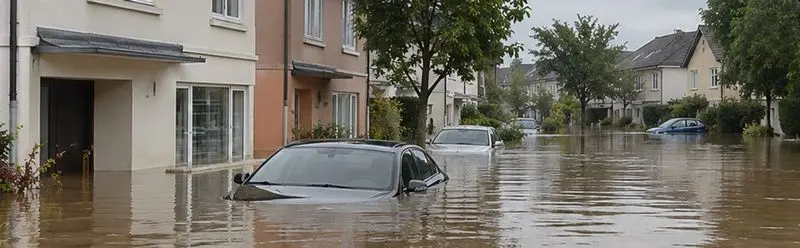
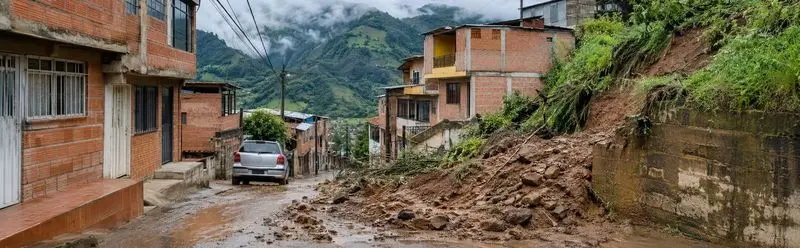
- Heavy rain, floods and landslides. Colombia has two rainy seasons rather than a summer and a winter. The UNGRD note of 25 March 2026 says the first runs from about March to June in the Andean and Caribbean regions and some foothills of the Orinoquía. The IDEAM note of 6 October 2026 says the second began in late September, with the highest chance of rain in October and November. It lists intense rain, flash floods, floods, landslides, lightning and windstorms.
What changes in your home
The official lists are the same for everyone. Your home is not. A baby, a medicine you take every day, a pet or a home near a river change what the list should hold. The full list, adjusted to the people and pets in your home, is in the app.
Where to read more
- The UNGRD portal, the national disaster risk management unit.
- The Bogotá page on a family plan for earthquakes, in Spanish.
- The Colombian Red Cross page La preparación comienza en casa.
- The Defensa Civil Colombiana website.
- The IDEAM note on the second rainy season (6 October 2026).
Common questions
What number do I call in an emergency in Colombia?
123. The national police (Policía Nacional) lists it as "Atención y Emergencias" on its home page, and Bogotá's government names "Línea de Emergencias 123" in its family plan page.
How many days of supplies does Bogotá's government ask for?
Bogotá's district government asks you to have what you need for at least 72 hours. That is the figure of the Bogotá page, not a national one. Our suggestion for any home: plan for 3 days.
What should the supplies include, according to the government?
Bogotá's page names water, a first aid kit, a torch, a radio with batteries and supplies for pets. The Colombian Red Cross adds non-perishable food and important documents. The full list, adjusted to your home, is in the app.
What are the main risks in Colombia?
The national agencies describe earthquakes, because the country sits on the Pacific Ring of Fire, and heavy rain with floods and landslides in two rainy seasons: March to June, and late September to November.
What is the number of the civil defence in Colombia?
144. The Defensa Civil Colombiana gives it as its emergency line on its own website.
Sources
- Policía Nacional de Colombia, home page, emergency lines
- Defensa Civil Colombiana, website
- Alcaldía de Bogotá / IDIGER, "Crea un plan familiar de Gestión del Riesgo en Bogotá para terremotos" (10 August 2026)
- Cruz Roja Colombiana, "La preparación comienza en casa" (20 October 2026)
- UNGRD, "Colombia, un país con múltiples amenazas geológicas" (2020)
- UNGRD, IDEAM and DIMAR, "Así se comportará el clima en Colombia" (25 March 2026)
- IDEAM, "Se consolida la segunda temporada de más lluvias en Colombia" (6 October 2026)
- UNGRD, national disaster risk management unit, portal