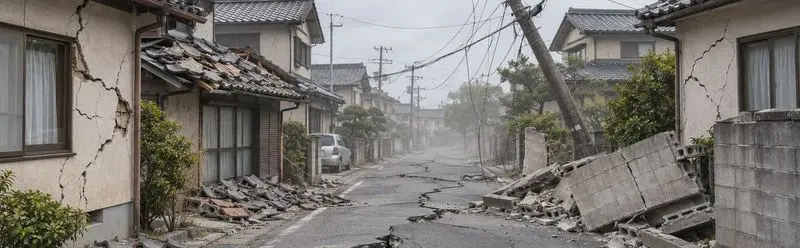
Emergency preparedness in Japan: what the government asks of households
You read that the Japanese government would like homes to hold a week of water and food after a major disaster. In a small flat, a week sounds like a lot to store. The same government page starts lower: at least 3 days, using food you already eat.
Japan's Prime Minister's Office (首相官邸) asks households to keep water and food for at least 3 days, and says that after a large-scale disaster, 1 week is desirable. It gives its own water figure: 3 litres per person per day for drinking, with water for flushing the toilet on top. The Japanese Red Cross separates home supplies from a bag you take when you leave.
Emergency numbers in Japan
| Service | Number | Source |
|---|---|---|
| Police (警察) | 110 | National Police Agency (警察庁) |
| Fire service and ambulance (消防・救急) | 119 | Fire and Disaster Management Agency (総務省消防庁) |
We read both pages on 13 November 2026. The National Police Agency says to call 110 for emergency reports about crimes and accidents (our translation of the Japanese original), and its page also lists #9110 for non-emergency worries and requests. On the Fire and Disaster Management Agency page, the example call to 119 opens with the operator asking whether it is a fire or an ambulance, so have that answer ready.
What the Japanese government asks
The Prime Minister’s Office (首相官邸) publishes a page on preparing for disasters, updated in October 2026. We read it on 13 November 2026. It tells households to keep:
「最低3日分の水・食料の備蓄」 (“at least 3 days of water and food in stock”, our translation of the Japanese original)
For a large-scale disaster, the same page says 1 week of supplies is desirable: 「大規模災害発生時には、「1週間分」の備蓄が望ましいとされています。」 (“in a large-scale disaster, 1 week of stock is considered desirable”, our translation of the Japanese original). The 2026 White Paper on Disaster Management (防災白書), which we read on 13 November 2026, puts it a little differently: 「食料や飲料水は、最低3日分、できれば1週間分を日常的に更新されるもので備えておくことが望ましい」 (“food and drinking water: at least 3 days, if possible 1 week, ideally in a form that is renewed in daily life”, our translation of the Japanese original). So there are two numbers: 3 days as the minimum, and 1 week as the goal.
A government radio programme from July 2026, made with the Ministry of Agriculture, Forestry and Fisheries, says it the same way for the home: from “at least 3 days” to “1 week” of food, for every person. The Japanese Red Cross (日本赤十字社) does not give a number of days in its booklet. It does say that for up to about 1 week after a disaster, daily life can be very different.
Our suggestion: start with 3 days for everyone in your home, which is where the government starts too, and add days toward a week as space and budget allow. Our guide to how many days an emergency kit should last puts Japan next to other governments.
Water
Japan has its own figure. The Prime Minister’s Office page says:
「飲料水 3日分(1人1日3リットルが目安)」 (“drinking water for 3 days, with 3 litres per person per day as a guide”, our translation of the Japanese original)
That is 9 litres per person for 3 days. The same page adds that you need water for flushing the toilet and similar uses, apart from the drinking water. The radio programme does the sum for a week: about 3 litres a day per person means 11 bottles of 2 litres per person. Other governments use other figures, and the water guide compares them.
The situations to think about first
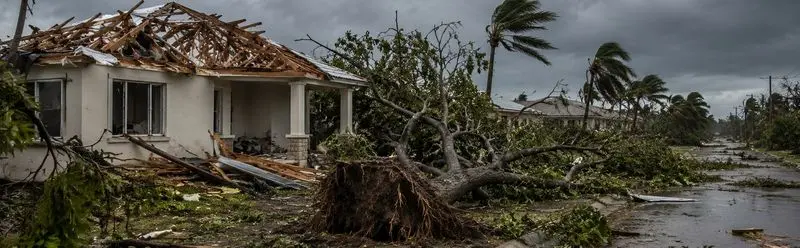
These are our working list of common situations, not a government list: earthquakes, storms, floods and hot weather.
- Earthquakes and other large-scale disasters. This is where the government’s 1 week applies. The Prime Minister’s Office page says to stock up for the time when electricity, gas and water services stop.
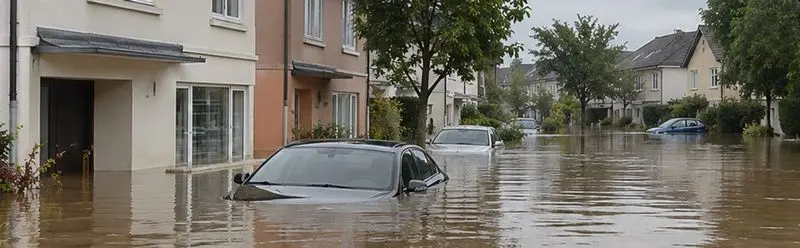
- Storms and floods. If you may have to leave quickly, both the Prime Minister’s Office and the Red Cross describe a separate bag for leaving, covered below.
- Hot weather. You will drink more, so water goes first. This one is our suggestion, not a quote from the government pages.
What to do at home
- Start with 3 days. Water (3 litres per person per day for drinking) and food for 3 days. The Prime Minister’s Office gives examples such as cooked rice of the alfa-mai type (アルファ米), tins and hard biscuits, and also lists a portable toilet and a gas cartridge stove.
- Use food you already eat. The Prime Minister’s Office asks you to stock food used in daily life (普段の生活の中で利用されている食品等). The method is rolling stock (ローリングストック): buy a little extra, eat the oldest first, and replace what you eat. The Red Cross describes the same idea.
- Pack a go bag as well. The Prime Minister’s Office describes a backpack (非常用持ち出しバッグ) packed in advance so you can leave at once. The Japanese Red Cross booklet lists what to put in it on p. 24, and says the list differs for each person.
- Keep it light and within reach. The Red Cross, in its booklet and on its Hokkaido branch page, advises a bag light enough to carry alone, kept in a place where you can take it at once.
What changes in your home
The government gives one figure for every household. In your home it moves with how many people live there, who needs medicine or special food, whether you have pets, and how much room you have. The full list, adjusted to your home, is in the app.
What this means for your home
| People at home | Water for 3 days | Water for 7 days |
|---|---|---|
| 1 | 9 L | 21 L |
| 2 | 18 L | 42 L |
| 3 | 27 L | 63 L |
| 4 | 36 L | 84 L |
Food for 3 days · Food for 7 days
The Prime Minister's Office of Japan asks households to keep water and food for at least 3 days, and says 1 week is desirable after a large-scale disaster. It gives 3 litres of drinking water per person per day as a guide. Source: Prime Minister's Office of Japan (首相官邸), 災害への備え
Where to read more
- The Prime Minister’s Office page 災害への備え, in Japanese, and the White Paper chapter.
- The Japanese Red Cross booklet 赤十字防災セミナー 災害への備え (PDF), in Japanese.
- The Ministry of Agriculture, Forestry and Fisheries page on food stockpiling, which names rolling stock, and the Tokyo Metropolitan Government disaster page, with a section on daily stockpiling (日常備蓄).
Common questions
How many days does the Japanese government ask households to prepare for?
At least 3 days of water and food. For a large-scale disaster, the government says 1 week of supplies is desirable. A government radio programme from July 2026 puts it the same way: from "at least 3 days" up to "1 week", for every person in the home.
How much water per person per day does the government recommend?
The Prime Minister's Office gives 3 litres per person per day as a guide, for drinking, so 3 days means 9 litres per person. It adds that you also need water for flushing the toilet and similar uses, apart from the drinking water.
What are the emergency numbers in Japan?
110 for the police, from the National Police Agency, and 119 for the fire service and ambulance, from the Fire and Disaster Management Agency. The police page also lists #9110 for cases that are not urgent.
What is rolling stock (ローリングストック)?
It is a way of keeping home supplies fresh. You buy a little more of the food you eat every day, eat the oldest first, and buy more to replace what you used. The Japanese Red Cross describes it, and an official of the Ministry of Agriculture, Forestry and Fisheries explains it in a government radio programme from July 2026.
What is the difference between home supplies and a go bag in Japan?
The Prime Minister's Office separates the stock you keep at home from the bag you take when you leave (非常用持ち出しバッグ). The Japanese Red Cross advises a bag light enough to carry alone, kept in a place where you can grab it at once.
Sources
- Prime Minister's Office of Japan (首相官邸), "災害への備え" (page updated October 2026)
- White Paper on Disaster Management 2026 (令和8年版 防災白書), on the Disaster Management Agency (防災庁) website, chapter on preparing at home
- Government Public Relations Online (政府広報オンライン), radio programme with the Ministry of Agriculture, Forestry and Fisheries (July 2026)
- Japanese Red Cross Society (日本赤十字社), booklet "赤十字防災セミナー 災害への備え" (2nd edition, October 2021)
- National Police Agency (警察庁), "緊急通報は「110」番"
- Fire and Disaster Management Agency (総務省消防庁), "119番"
- Ministry of Agriculture, Forestry and Fisheries (農林水産省), food stockpiling
- Tokyo Metropolitan Government (東京都防災)
- Japanese Red Cross Society (日本赤十字社), Hokkaido branch, disaster preparedness checklist