Emergency preparedness in Poland: what the government safety guide says
You hear that households in Poland should keep supplies at home, and it is not clear what that means in practice: how many days, how much water, which number to call. The government's own guide answers all three in plain words.
The Polish government's safety guide (Poradnik bezpieczeństwa, 1/2025) asks households to keep home supplies for at least 3 days, with at least 3 litres of water per person per day. The numbers it lists are 112, 997 for the police, 998 for the fire service and 999 for the ambulance.
Emergency numbers in Poland
| Service | Number | Source |
|---|---|---|
| Emergency number (numer alarmowy) | 112 | Government safety guide, table and fire chapter |
| Police (policja) | 997 | Government safety guide, table |
| Fire service (straż pożarna) | 998 | Government safety guide, table |
| Ambulance (pogotowie ratunkowe) | 999 | Government safety guide, table |
These come from the table “Telefony alarmowe” (emergency phone numbers) in the government’s “Poradnik bezpieczeństwa” (1/2025), which we read on 13 November 2026. In the chapter on fires the guide tells you to call the emergency number (our translation of the instruction): “Zadzwoń pod numer alarmowy 112.”
The table also lists numbers for the water, heating and gas utilities, which are for the utility companies and not for danger to life.
What the Polish government asks
The government publishes its advice in the “Poradnik bezpieczeństwa” (safety guide). The 1/2025 edition has this heading:
“ZAPASY DOMOWE NA MINIMUM 3 DNI” (Rząd RP, safety guide 1/2025; our translation: “home supplies for at least three days”)
The government page “Plan na kryzys” says the same in a sentence:
“Przygotuj domowe zapasy na minimum 3 dni i regularnie je przeglądaj.” (Rząd RP, “Plan na kryzys”; our translation: “Prepare home supplies for at least three days and review them regularly.”)
We read both on 13 November 2026. The figure is 3 days. For the go bag, the page of the Poznań regional fire service (KW PSP Poznań, published on gov.pl) says:
“Plecak powinien zapewnić nam funkcjonowanie przynajmniej 72 godziny.” (our translation: “The backpack should keep us going for at least seventy-two hours.”)
That is a regional body, not the central guide, so read it as a regional recommendation.
Our suggestion: start with 3 days for everyone in your home, then add days as space and budget allow. Our guide to how many days an emergency kit should last puts Poland next to other governments.
Water
Poland has its own figure. The safety guide says:
“minimum 3 litry wody na osobę na dobę, żywność gotowa do spożycia.” (Rząd RP, safety guide 1/2025; our translation: “at least three litres of water per person per day, ready-to-eat food.”)
The government page on long power cuts gives the same figure: “min. 3 litry dziennie na osobę”. Over 3 days that is 9 litres per person, or 36 litres for a family of 4 (our arithmetic). Other governments use other figures, and the water guide compares them.
The main risks the guide covers
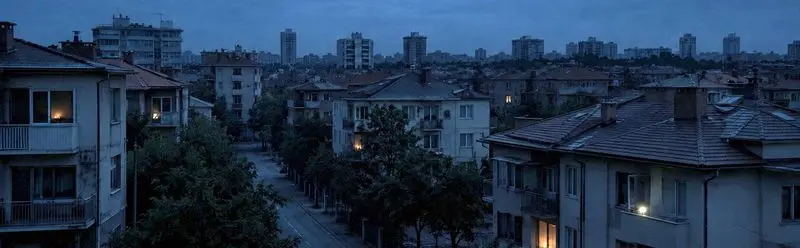
- A long power cut. The government page on blackouts says it “może potrwać nawet kilka dni. Stracisz wówczas dostęp do wody,” (our translation: “can last even a few days. You will then lose access to water,”). The same page asks for home supplies for at least 3 days.
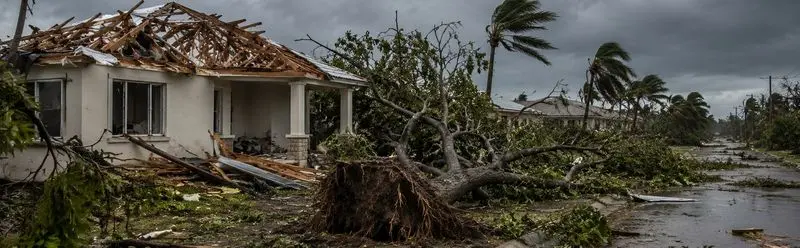
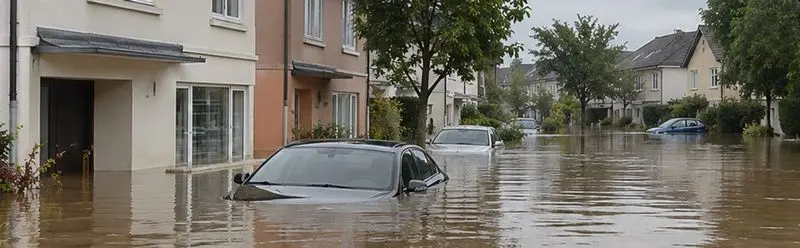
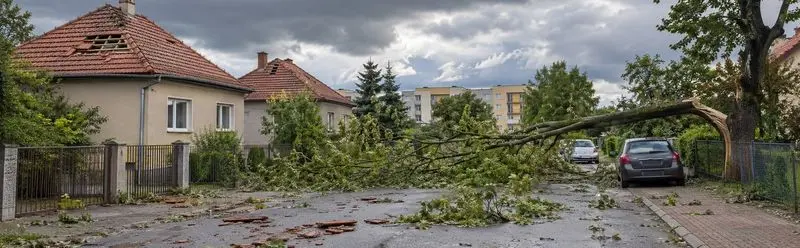
- Floods and extreme weather. The introduction of the guide says: “Wzrasta też ryzyko ekstremalnych zjawisk pogodowych.” (our translation: “The risk of extreme weather events is also growing.”). The guide has a chapter on floods, “Powódź”.
What to do at home
- Start with 3 days of home supplies. Examples from the guide: water (at least 3 litres per person per day), ready-to-eat food, a torch, a radio and a charged power bank. The full list, matched to your home, is in the app. The 3-day checklist gives the general version.
- Review them regularly. The government page asks you to review your home supplies regularly.
- Pack a go bag as well. If you may have to leave quickly, a go bag for at least 72 hours is what the Poznań fire service page describes. Our suggestion: keep it by the door and pack it light enough to carry alone.
- Think of who needs more. A baby, an older relative, pets or someone on regular medication change the list. Our suggestion is to count them in from the start.
What changes in your home
Who lives with you changes the list: children, older relatives, people who take medication every day and pets each need something different. Where you live counts too, because a flat in a city and a house by a river do not face the same risks. The list that fits your home, with all these differences, is in the app.
What this means for your home
| People at home | Water for 3 days |
|---|---|
| 1 | 9 L |
| 2 | 18 L |
| 3 | 27 L |
| 4 | 36 L |
Food for 3 days
The Polish government's safety guide (1/2025) asks for home supplies for at least 3 days, with at least 3 litres of water per person per day. Source: Government of Poland (Rząd RP), Safety Guide (Poradnik bezpieczeństwa), 1/2025
Where to read more
- The government’s Poradnik bezpieczeństwa (PDF, 1/2025), in Polish, and the portal with the guide’s topics.
- The pages Plan na kryzys, Długotrwały brak prądu (blackout) and Powódź, all in Polish.
- The Poznań regional fire service page Plecak ewakuacyjny, in Polish.
Common questions
How many days does the Polish government ask households to prepare for?
At least 3 days. The government's safety guide (1/2025) has the heading "Zapasy domowe na minimum 3 dni" (home supplies for at least three days), and its page "Plan na kryzys" says the same. For a go bag, a regional fire service page on gov.pl says at least 72 hours.
How much water per person per day does the Polish guide give?
At least 3 litres of water per person per day, which is 9 litres per person over 3 days. The same figure is on the government's page about long power cuts.
What are the emergency numbers in Poland?
The government guide lists 112 as the emergency number, 997 for the police, 998 for the fire service and 999 for the ambulance (pogotowie ratunkowe). In its fire chapter it tells you to call 112.
Who publishes the Polish safety guide?
The government of Poland (Rząd RP). The guide says the government prepared it.
Is the guide available in languages other than Polish?
The guide says other language versions can be downloaded in electronic form. It also says it would be sent to every household in Poland, and it has a braille version.
Sources
- Government of Poland (Rząd RP), "Poradnik bezpieczeństwa: Przeczytaj, przećwicz i zachowaj!" (PDF, 1/2025)
- Government of Poland (Rząd RP), "Plan na kryzys"
- Government of Poland (Rząd RP), "Długotrwały brak prądu (blackout)"
- Government of Poland (Rząd RP), "Powódź"
- KW PSP Poznań (regional fire service, on gov.pl), "Plecak ewakuacyjny – poradnik bezpieczeństwa"
- Government of Poland (Rząd RP), "Poradnik bezpieczeństwa" (index page)