An emergency kit for your dog or cat: what do the official pages ask for?
The lights go out, or you are told to leave home. You have your own bag, and then you look at the dog or the cat and realise you have not planned anything for them.
Ready.gov says pets belong in your emergency plan, and lists food and water for several days, regular medicines, an ID tag and leash, a carrier and copies of papers. The UK checklist, Germany's BBK and France's SGDSN also name pet food. Amounts depend on the animal, and none of them gives one number.
Pets are part of the plan
Ready.gov says your pets are family, so they belong in your emergency plan. If local officials ask you to leave, your pet should leave too, because a pet left behind may get lost or hurt. The UK Government asks you to remember items your household relies on, such as pet food, and its checklist lists pet food and bottled water. Germany’s BBK asks whether your supplies also cover the pets you would have to look after, and France’s SGDSN lists pet food among the non-perishable foods that need no cooking.
What Ready.gov suggests for a pet kit
Ready.gov’s list is longer. These are the main items:
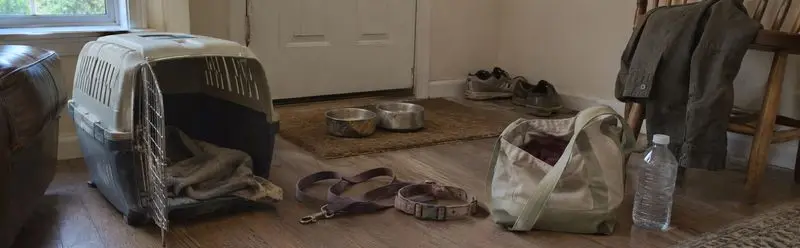
- Several days’ food, in an airtight, waterproof container.
- A water bowl and several days’ water.
- An extra supply of the medicine your pet takes, in a waterproof container.
- A collar with an ID tag, a harness or leash, and a spare.
- A carrier or crate, ideally one for each pet.
Ready.gov’s full list is longer; what your pet needs depends on the animal. Ready.gov suggests two kits: a larger one for staying at home and a lightweight one for leaving. It asks you to review them regularly, so that the food and medicines stay fresh.
Our suggestion: keep the pet items next to your own kit, and check both on the same day.
A carrier your pet already trusts
Ready.gov notes that you may need to put a cat or dog into a carrier, so it helps if they are comfortable with it. It suggests leaving the carrier out and open where your pet spends time, putting treats near it or inside, and adding a familiar blanket. It also says to note where your pets hide, so you can find them quickly if you have to leave.
Who, and where
Ready.gov asks you to agree with a neighbour, friend or relative who can look after your pet, or take it out, if you cannot. It warns that many hotels and public places that take people in do not allow pets, so it asks you to know a safe place for your pet before you need it. It also suggests a microchip, with your address and phone number kept up to date and a contact outside your area. For anything you are unsure about, it suggests asking your local emergency management or animal control office.
The part that is different for every home
A cat and a large dog do not need the same things, and it changes again with several animals, a daily medicine or a special diet. For how many days to plan for, see how many days an emergency kit should last. For your own drinking water, see how much water per person per day.
Country by country
Each page below is written from that country's own official sources.
Common questions
Should my pet leave home with me?
Ready.gov says yes: if local officials ask you to leave, your pet should leave too, because a pet left behind may get lost or hurt.
How much food and water should I keep for a pet?
Ready.gov says several days' supply of food, in an airtight, waterproof container, and a water bowl with several days' water. None of the official lists gives a figure per animal, because it depends on the animal.
Which papers and details should I have ready?
Ready.gov suggests copies of your pet's registration and other relevant documents, in a waterproof container and also on your phone, and a photo of you together with your pet. It also suggests a microchip, with your address and phone number kept up to date and a contact outside your area.
How do I get a cat or dog used to a carrier?
Ready.gov suggests leaving the carrier out and open where your pet spends time, putting treats near it or inside, and adding a familiar blanket. It also says to note where your pet hides, so you can find it quickly.
What do the other official lists say?
The UK checklist lists pet food and bottled water. Germany's BBK asks whether your supplies also cover your pets, and its checklist has a line for a pet food supply. France's SGDSN lists pet food among the non-perishable foods that need no cooking.