What should you keep in an emergency kit for your car?
You are on a long drive, or the weather turns, and the car stops. Your supplies are at home, far away, and you wonder what is actually in the car.
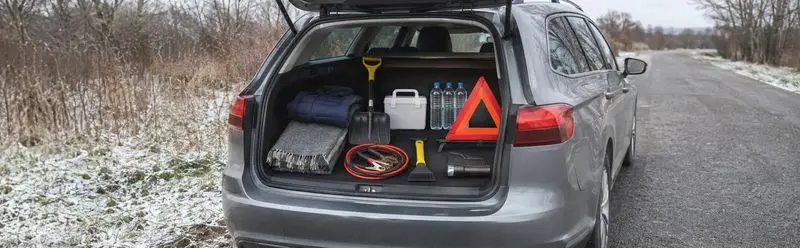
Ready.gov says to keep a kit in your car in case you are stranded: jumper cables, flares or a reflective triangle, a scraper, a phone charger, a blanket and a map. Canada adds water in plastic bottles, food that will not spoil and a first aid kit. The UK adds a torch and warm clothes. For winter, all three name a shovel or sand.
A kit that stays in the car
Ready.gov says to keep an emergency supply kit in your car, in case you are stranded. The Government of Canada says the same: if you have a car, prepare an emergency car kit and keep it in the vehicle. The UK Government asks you to pack a few essential items in the car for the case of getting stuck in wintry weather, and says a first aid kit in the car can also help.
What the pages name
Ready.gov, Canada and the UK Government overlap on these items. The main ones:
- Jumper cables (the UK calls them jump leads).
- A blanket and warm clothes.
- Water, in plastic bottles, and food that will not spoil.
- A flashlight or torch, and a phone charger for the car.
- A first aid kit. Canada asks for one with a seatbelt cutter.
- Flares or a reflective triangle.
Canada’s list is longer, with eleven items plus six more to keep in the trunk, and Ready.gov also names a map and sand. What the car needs depends on where you drive.
Our suggestion: keep the car kit apart from your home supplies, so that you do not have to remember to take anything with you, and check both on the same day.
Winter
Ready.gov asks for good winter tires with enough tread, or any chains or studs required where you live, and says to keep a full tank of gas. For the winter kit it names jumper cables, sand, a flashlight, warm clothes, blankets, bottled water and non-perishable snacks. Canada adds a small shovel, a scraper and a snowbrush, and sand, salt or non-clumping cat litter. The UK Government names a shovel for snow and high-visibility clothing.
If the weather is bad, Ready.gov says to stay off the roads if at all possible, and that if you are trapped in your car, you should stay inside.
Checking the kit
Canada says to keep water in plastic bottles, so they will not break if frozen, and to change it every six months. For the whole kit it asks you to replace items that might expire at least once a year. For how long food and water last, see do emergency food and water expire.
The part that is different for every home
A short commute and a long motorway drive do not need the same things, and it changes again with children, a medicine you cannot miss or a cold region. For how many days to plan for at home, see how many days an emergency kit should last.
Country by country
Each page below is written from that country's own official sources.
Common questions
Where should the car kit be kept?
In the car. The Government of Canada says: if you have a car, prepare an emergency car kit and keep it in the vehicle. Ready.gov says to keep a kit in your car, in case you are stranded.
What should I add to the car for winter?
Ready.gov lists jumper cables, sand, a flashlight, warm clothes, blankets, bottled water and non-perishable snacks. Canada lists a small shovel, a scraper and a snowbrush, and sand, salt or non-clumping cat litter. The UK Government lists a torch, warm clothes and blankets, high-visibility clothing, jump leads, food and drink, and a shovel for snow.
What do the official pages say if I am trapped in the car in winter?
Ready.gov says to stay off the roads if at all possible, and that if you are trapped in your car, you should stay inside. It also asks you to wear layers of warm clothing if you do need to go outside.
How often should the water in the car be changed?
The Government of Canada says to keep water in plastic bottles so they will not break if frozen, and to change it every six months. For the kit as a whole, it says to replace items that might expire, such as food, water, batteries and medicines, at least once a year.
Should I keep the fuel tank full?
Ready.gov says to keep your gas tank full in case of evacuation or power outages, and that a full tank also keeps the fuel line from freezing. It also suggests having a mechanic check things like the battery, brakes, lights, wipers and washer fluid before an emergency.