What do the UK, US and Canadian governments ask you to keep in an emergency kit?
Three governments publish an emergency kit list, and the lists do not say the same thing. Here is where they agree, where they differ and what that means for your home.
All three ask for water, non-perishable food, a torch or flashlight, a radio, a first aid kit, medicines, copies of documents, cash and a way to charge a phone. They differ on length (3 days in the UK, at least 72 hours in Canada, several days in the US), on water per person per day and on paper or digital documents.
Where the three agree
The UK Government’s Be Ready page, Ready.gov and the Government of Canada all ask for the same basics: water, non-perishable food, a torch or flashlight, a radio, a first aid kit, medicines, copies of important documents, cash and a way to charge a phone. Each also names baby items and pet food for the homes that need them. Each page is longer than this, and the country pages have the detail: UK, US and Canada.
How long the kit should last
The UK Government says 3 days. The Government of Canada says to be self-sufficient for at least 72 hours. Ready.gov says several days and gives no number. For what the numbers mean, see how many days an emergency kit should last.
Water per person per day
The UK Government says 3 litres per person per day for drinking, and that you need more for cooking and washing. Ready.gov says at least one gallon (about 3.8 litres) per person per day, for drinking and sanitation, and that children, nursing mothers and sick people may need more. The Government of Canada’s video says about four litres per person, per day. For the full water picture, see how much water per person per day.
Medicines, cash and documents
This is where the three differ most.
- Medicines: the UK Government asks for essential medication, a written list of regular medicines and doses, and to request repeat prescriptions up to 5 working days early. The Government of Canada’s video says enough medication to last a couple of weeks. Ready.gov lists prescription medications and gives no amount.
- Cash: the UK Government says a mix of coins, notes and cards, and that the amount depends on your family’s essential needs. The Government of Canada’s video says enough for basic needs for a few weeks. Ready.gov lists cash or traveler’s checks.
- Documents: the UK Government asks for printed copies. Ready.gov says copies saved electronically or in a waterproof, portable container. The Government of Canada names birth certificates, wills, passports and insurance policies.
A few items on each page
Beyond the basics, each page adds a few items of its own. Ready.gov lists a whistle, a dust mask, plastic sheeting and duct tape, and a wrench or pliers to turn off utilities. The Government of Canada suggests a phone with a cord for emergencies. The UK Government names a phone Medical ID and the power cut number for the UK.
Our suggestion: read your own country’s page first, then use this comparison to see what the other two add.
Where to keep it, and how often to check
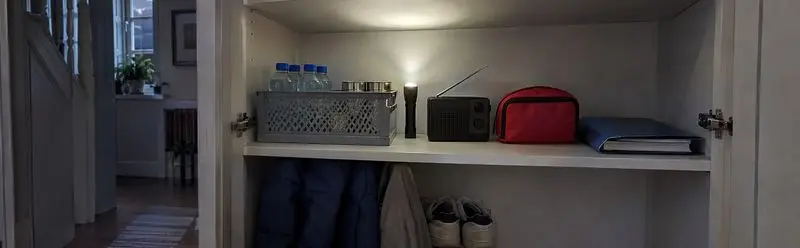
The Government of Canada suggests an accessible place such as the front-hall closet, and says everyone in the household should know where the kit is. Ready.gov says to keep it in a designated place that all family members know, and also to keep kits at work and in the car. The UK Government suggests a reminder every six months to check expiry dates. The Government of Canada says to replace items that may expire at least once a year, and Ready.gov says to reassess your needs every year.
The part that is different for every home
Which list fits you depends on where you live, how many of you there are, whether you have a baby, a pet or medicines to take every day, and what could happen where you live. The Emergency Kit Guide app turns the guidance for your country into a kit for your household, with what is still missing and what is already ready.
Country by country
Each page below is written from that country's own official sources.
Common questions
Do the UK, US and Canadian governments ask for the same things?
Mostly yes. All three list water, non-perishable food, light, a radio, first aid, medicines, copies of documents, cash and a way to charge a phone. They differ on how many days, how much water, how much cash and whether documents are on paper or saved electronically.
How many days should the kit cover?
The UK Government says 3 days and the Government of Canada says at least 72 hours. Ready.gov says several days and gives no number. For how the numbers compare, see the guide on how many days to plan for.
How much water per person per day?
The UK Government says 3 litres per person per day for drinking, with more for cooking and washing. Ready.gov says at least one gallon per person per day, for drinking and sanitation. The Government of Canada's video says about four litres.
How much cash should I keep?
None of the three gives an amount in the page text. The UK Government says it depends on your family's essential needs, and asks for a mix of coins, notes and cards. Ready.gov lists cash or traveler's checks. The Government of Canada's video says enough for basic needs for a few weeks.
Should documents be on paper or digital?
The UK Government asks for printed copies. Ready.gov says copies saved electronically or kept in a waterproof, portable container. The Government of Canada says to keep copies of documents such as birth certificates, wills, passports and insurance policies.
How often should I check the kit?
The UK Government suggests a reminder every six months. The Government of Canada says to replace items that may expire at least once a year, and Ready.gov says to reassess your needs every year.