Ready-made emergency bag: what to add for your home
You bought a ready-packed emergency bag, put it in the hall cupboard and felt that it was done. Then you wonder what is not in it: your medicine, the baby's formula, the dog's food.
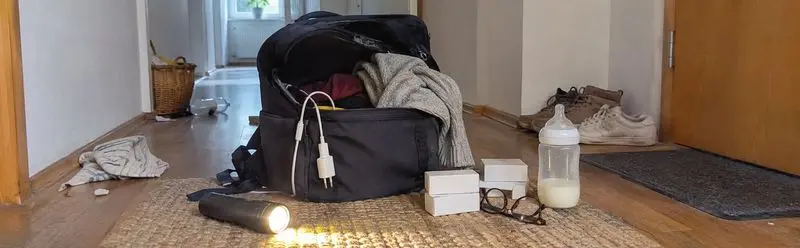
A ready-made bag is a good start, but it is the same for everyone. Official lists ask you to add what your household relies on: medicines, baby formula and nappies, pet food, spare glasses, copies of documents and cash. Check its dates too, then add what is specific to your home.
What a ready-made bag does well
It puts the common core in one place. The official lists agree on it: water, food that keeps, light, first aid, warm clothes, a radio, a power bank and copies of documents. Germany’s BBK lists much of this for a bag to take with you if you must leave. A bag like that saves you a first afternoon of shopping.
Because it is made for everyone, it cannot be made for you.
What the official lists say to add
These are examples from the lists, not a full list:
- Medicines. Germany’s BBK says personal medicines matter most if you may be away from home. Ready.gov says to organise and protect your prescriptions.
- A baby. The UK checklist asks for formula and for nappies and wipes. Ready.gov adds bottles and diaper rash cream.
- Pets. The UK checklist, Ready.gov and the American Red Cross all ask for pet food.
- Glasses and aids. France’s SGDSN asks for a spare pair of glasses, and Germany’s BBK asks for replacements for aids such as glasses or hearing systems.
- Cash and papers. France’s SGDSN says cash, because cash machines may not work, and photocopies of identity papers and prescriptions in a waterproof pouch. The UK checklist asks for printed copies of documents.
What is already inside may be old
A bag that has sat in a cupboard ages like any other supply. The UK Government suggests a reminder every 6 months to check expiry dates, and France’s SGDSN says twice a year, including replacing the batteries.
Our suggestion: open the bag on the day you get it. Put a date in your calendar, take out what you do not need and write down what is missing.
A bag for leaving, supplies for staying
A ready-made bag is usually a go bag: the bag you grab when you have to leave. Germany’s BBK keeps it apart from supplies for staying at home, which need days of water and food. If you want to know how many days to plan for, see how many days an emergency kit should last.
The part that is different for every home
What is missing from the bag depends on who lives with you, what they take every day, how old they are, whether you have pets and where you live. The 3-day checklist shows the main things that every list shares.
Country by country
Each page below is written from that country's own official sources.
Common questions
Is a ready-made bag enough?
It is a start. The American Red Cross says to gather the basic supplies and then add the unique things each member of your family may need, such as medical supplies, baby supplies and pet supplies. Germany's BBK says your needs depend on your life situation.
What should I add first?
Anything someone relies on every day. Germany's BBK says that carrying personal medicines is especially important if you have to stay somewhere else. The UK Government says to request repeat prescriptions up to 5 working days before you need the medicine.
Is baby formula in the bag a good idea?
The UK checklist says ready-made, ready-to-feed formula is best, because you may not be able to boil water to make up powdered formula safely.
How often should I look inside it?
The UK Government suggests a reminder every 6 months, and France's SGDSN says twice a year, to check expiry dates of food and medicines and replace the batteries.
Is it the same as home supplies?
No. Germany's BBK treats a bag for leaving quickly and supplies for staying at home as two separate things, and the bag is lighter. Home supplies cover days at home with water, food, light and warmth.